Frequently Asked Questions
Choosing a school or homeschool partner is a big decision. We want families to clearly understand who we are, how our program works, what students can expect, and whether Lighthouse may be the right fit for their family.
About Lighthouse Learning
-
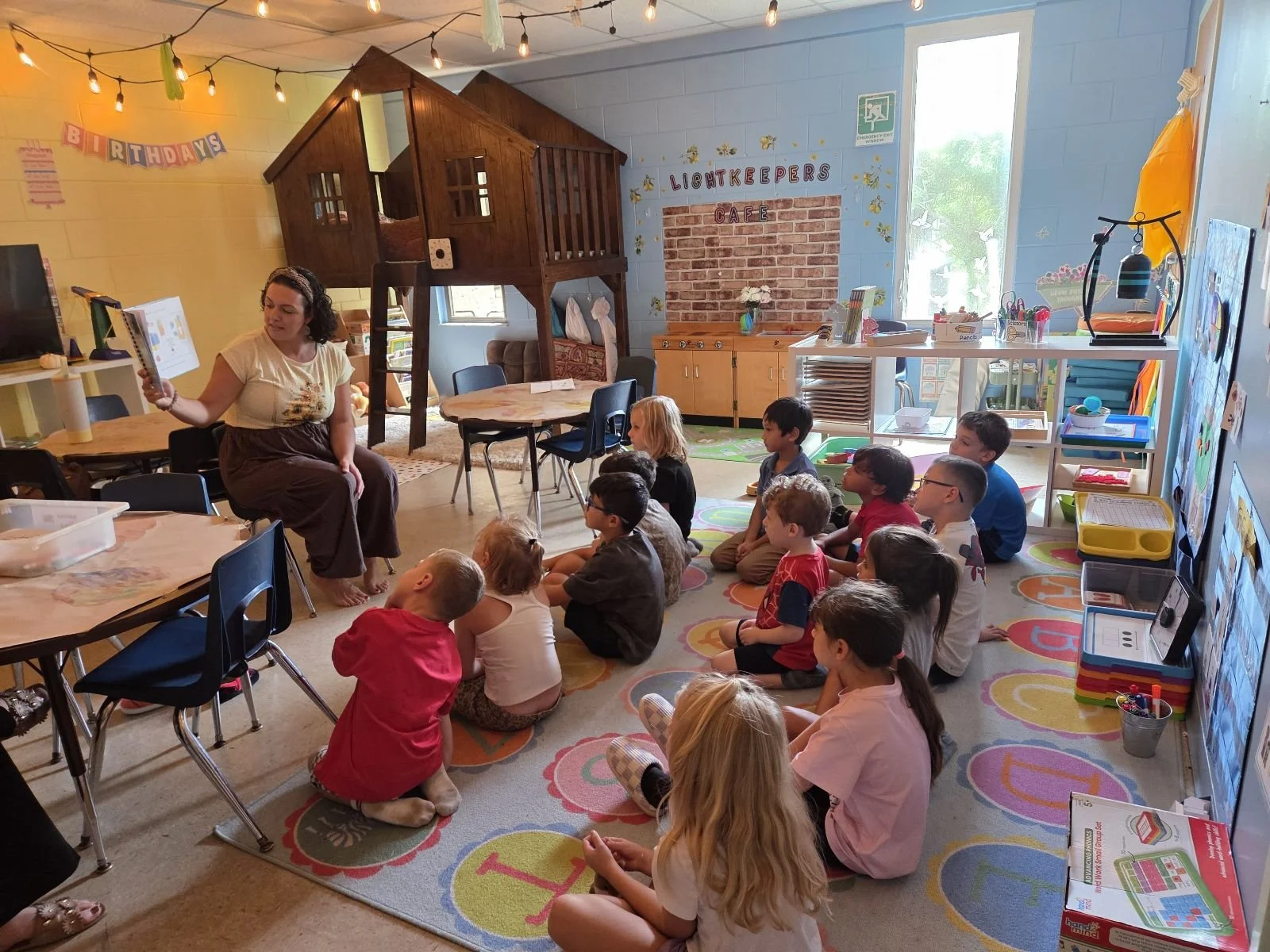
Lighthouse Learning is a K–8 Microschool and homeschool hybrid designed for families looking for something different from a traditional school experience.
Our program combines:
Strong academic foundations
Personalized, mastery-based learning
Small-group instruction
Flexible learning pathways
Hands-on enrichment
Meaningful teacher relationships
Character development
A supportive school community
Our goal is simple: know students well, meet them where they are, and keep them moving forward.
-
Lighthouse combines the community and structure families value in school with some of the flexibility and personalization families value in homeschooling.
Students experience smaller learning environments, meaningful relationships with teachers, flexible academic grouping, mastery-based learning, hands-on experiences, enrichment, and opportunities to develop greater independence.
Rather than assuming every child of the same age needs exactly the same instruction at exactly the same pace, we look more closely at what a student has mastered, where support may be needed, and what they are ready to learn next.
-
Students who thrive at Lighthouse are generally able to participate successfully in a small-group, collaborative learning environment with typical classroom support.
Successful Lighthouse students are often:
Curious and willing to learn
Able to participate in small-group instruction
Developing independence with schoolwork
Responsive to teacher guidance and redirection
Able to transition between activities with teacher support
Respectful of peers, adults, and the learning environment
Willing to participate, practice, and persevere
Growing in responsibility and ownership of their learning
Students do not have to arrive at Lighthouse as perfectly independent learners. Part of our job is helping them grow.
However, students must be able to participate safely and successfully in a group-learning environment without requiring intensive one-to-one support throughout the school day.
Our Academic Program
-
Our academic model can be summarized in three important ideas:
HomePod → Walk-to-Learn → Mastery
HomePod is where students belong.
Every student has a consistent classroom community where relationships, routines, belonging, and grade-level experiences are built.
Walk-to-Learn is how we respond to academic readiness.
For Reading and Math, students may receive instruction in groups that more closely match what they are ready to learn rather than relying solely on the grade associated with their age.
Mastery helps us determine what comes next.
Teachers use student work, observation, assessments, practice, and demonstrated understanding to determine when students need additional instruction, when they have mastered a skill, and when they are ready to move forward.
HomePod provides belonging. Walk-to-Learn provides targeted instruction. Mastery helps us determine what comes next.
-
No.
Every student has a HomePod, which provides a consistent classroom community and sense of belonging.
Students may move to different instructional groups for Reading and Math and then return to their HomePod.
This allows us to provide greater academic flexibility without sacrificing classroom community.
-
No.
Walk-to-Learn groups are flexible instructional groups—not permanent labels or tracks.
As students strengthen skills, demonstrate mastery, or show readiness for greater challenge, their instructional needs can change.
Their placement can change with them.
-
Mastery-based learning means students are given opportunities to learn, practice, receive feedback, demonstrate understanding, and then move forward.
We don't want a student moving to the next concept simply because the calendar says it's time if an essential foundational skill still needs additional instruction.
At the same time, students who demonstrate readiness for greater challenge shouldn't have to wait unnecessarily.
A child may need greater challenge in Reading while needing additional reinforcement in Math—or the reverse.
Learning isn't a race, and academic growth isn't always a straight line.
Our goal is to determine what each student is ready to learn next and keep them moving forward.
Placement + Progress
-
We don't guess.
New students participate in a placement process designed to help us understand their current academic readiness and determine an appropriate instructional starting point.
The purpose is not to rank students, compare them to other children, or determine whether they can “pass” a test.
We are trying to answer a much more useful question:
What is this child ready to learn next?
-
Placement is intentionally designed to be small, relational, and encouraging rather than feeling like a traditional standardized-testing environment.
The amount of time needed can vary depending on the student, their academic level, and how many students are being assessed.
Students are typically assessed in a very small setting, with up to four students working with one teacher.
Reading
A teacher works individually with each student to help determine their instructional reading level and better understand the reading skills they can demonstrate independently.
Math
Students complete a paper-based Christian Light Education Math placement assessment.
Because this is a true placement tool rather than simply a grade-level test, we may adjust the assessment while the student is working.
If the material is clearly too easy or too challenging, we can move to another level rather than asking a student to continue through material that isn't appropriate for them.
Writing + Getting to Know Your Child
Students also complete an “All About Me” writing activity.
We never want placement to be only about numbers.
We want to begin learning about your child's interests, personality, strengths, experiences, and the things that matter to them.
Before we can teach a student well, we need to begin knowing the student well.
-
We hold Parent Teacher conferences and provide Trimester Progress Reports!
We believe progress should tell families more than a single score or letter grade.
When we talk about progress, we want to help answer four important questions:
What can my child demonstrate independently?
What has my child mastered?
Where does my child still need support or additional practice?
What is my child's next step?
We hold Parent Teacher conferences and provide Trimester Progress Reports!
Learning Support + Student Fit
-
No.
Lighthouse is a Microschool and homeschool hybrid designed to provide personalized learning within a small-group educational environment.
We serve students with a variety of strengths, learning profiles, and educational experiences, but we are not a special education school and are not equipped to provide intensive one-to-one therapeutic, behavioral, or highly specialized services throughout the school day.
We share this with care and transparency because the right school fit matters for every child.
-
Yes. Lighthouse can serve students with different learning profiles, including students with ADHD, dyslexia, dysgraphia, dyscalculia, and students who have an IEP or 504 Plan.
However, it is important for families to understand that Lighthouse does not operate a special education program and is not designed to provide the full range of specialized services that may be available through a traditional special education setting.
While our educational model can support a child's growth, some students may need additional services outside of Lighthouse, such as specialized tutoring, academic intervention, occupational therapy, speech therapy, behavioral therapy, counseling, or other professional services based on their individual needs.
An IEP, 504 Plan, diagnosis, or learning difference does not automatically determine whether a student is a good fit for Lighthouse. We thoughtfully consider the whole child, the student's individual needs, the level of support required, and whether those needs can be appropriately supported within our small-group model.
Students must be able to participate safely and successfully in a collaborative learning environment with typical classroom support.
We can be an important part of a child's support system—but we may not be the entire support system.
We believe transparency is important. If a child requires intensive, highly individualized, therapeutic, behavioral, or one-to-one support throughout the school day, Lighthouse may not be able to fully meet those needs.
Our goal is to partner honestly with families so that each child has the combination of educational and outside support they need to grow and be successful.
Our small-group, personalized learning model can be very supportive for many of these students. Depending on the child's needs, students may benefit from:
Small-group instruction
Structured literacy and research-based phonics instruction
Flexible academic grouping
Additional practice and skill reinforcement
Clear routines and structure
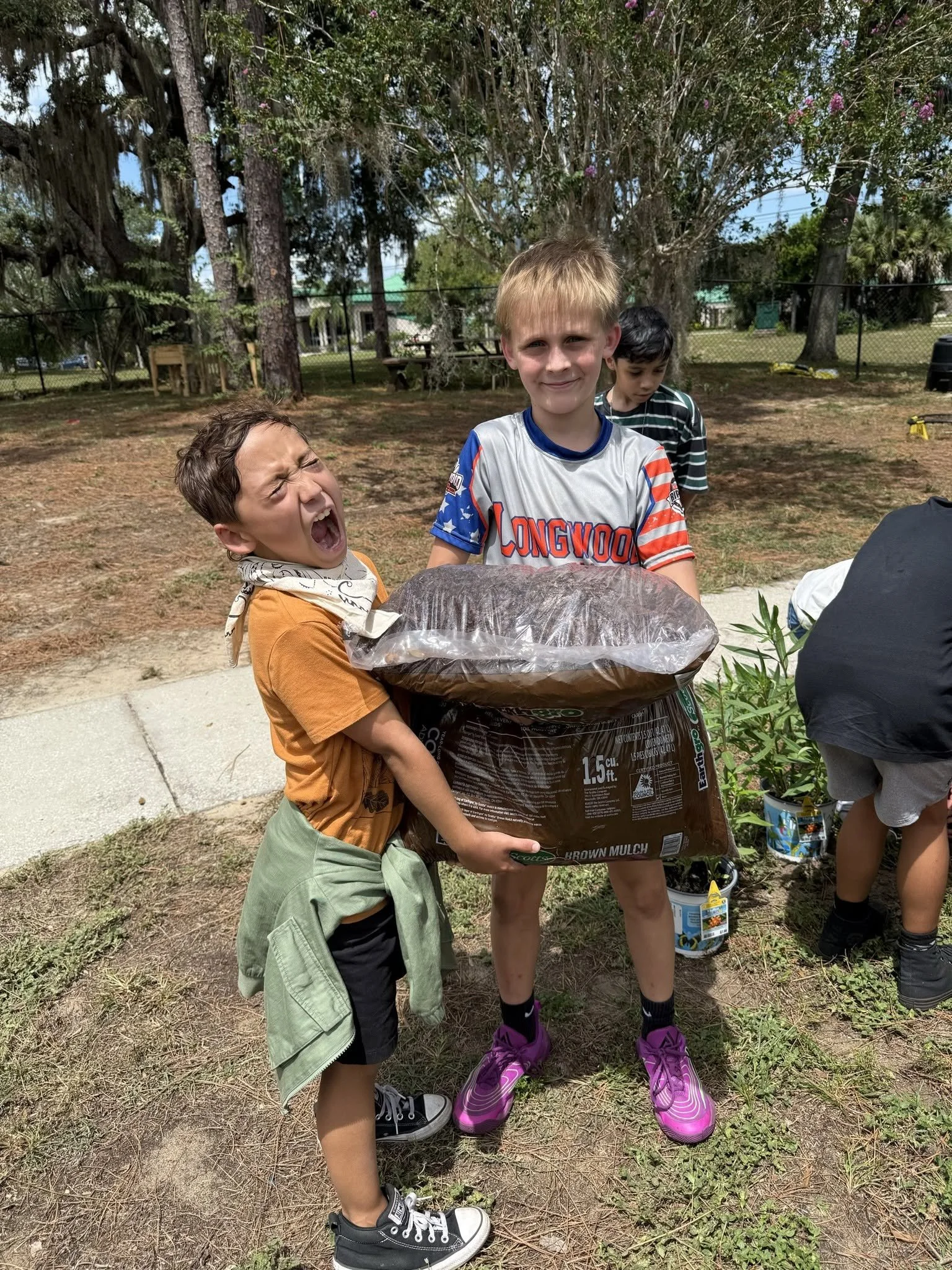
Movement and outdoor time
Hands-on learning
Strong teacher relationships
A smaller, relationship-centered learning environment
-
Having an academic gap does not automatically mean a child isn't a fit for Lighthouse.
Our placement and Walk-to-Learn model is designed to identify where students are ready to begin in Reading and Math rather than assuming every child should receive the same instruction simply because they are the same age.
Students may receive smaller-group instruction, additional practice, repetition, skill reinforcement, or additional time when appropriate.
However, for our Academic Program, students generally need to be working within approximately two instructional levels of their age-based grade placement in core academic areas.
When foundational gaps extend beyond that range, a student may require a level of remediation, intervention, repetition, or individualized instruction that goes beyond what our small-group academic model is designed to provide.
This is important because students still need to be able to:
Participate meaningfully in their HomePod and grade-level learning experiences
Access instruction within our Walk-to-Learn group structure
Make progress within the pace and structure of our academic program
Work with an appropriate level of independence and teacher support
Participate in Science, Social Studies, Writing, projects, and collaborative learning with their peers
Walk-to-Learn allows us to personalize instruction, but it is not intended to replace intensive academic intervention or one-to-one remediation.
When a student has significant foundational gaps, families may need a more specialized academic setting or intensive outside intervention to provide the frequency and level of support the student needs.
We consider each child individually using placement results, student records, family conversations, teacher observations, and the overall level of support needed.
Our goal is not simply to ask, “Can we enroll this student?” It is to ask, “Can this student successfully access our program, make meaningful progress, and feel successful here?”
-
Our flexible grouping and mastery-based model allows us to respond when students demonstrate readiness for greater challenge.
A student may be ready to move more quickly or engage with more advanced material in one academic area while working at a different instructional level in another.
We don't believe greater challenge should simply mean “more work.”
The goal is to provide instruction that is appropriately challenging and continues moving the student forward.
Our Enrichment Program
-
Thursday and Friday bring a different rhythm to Lighthouse.
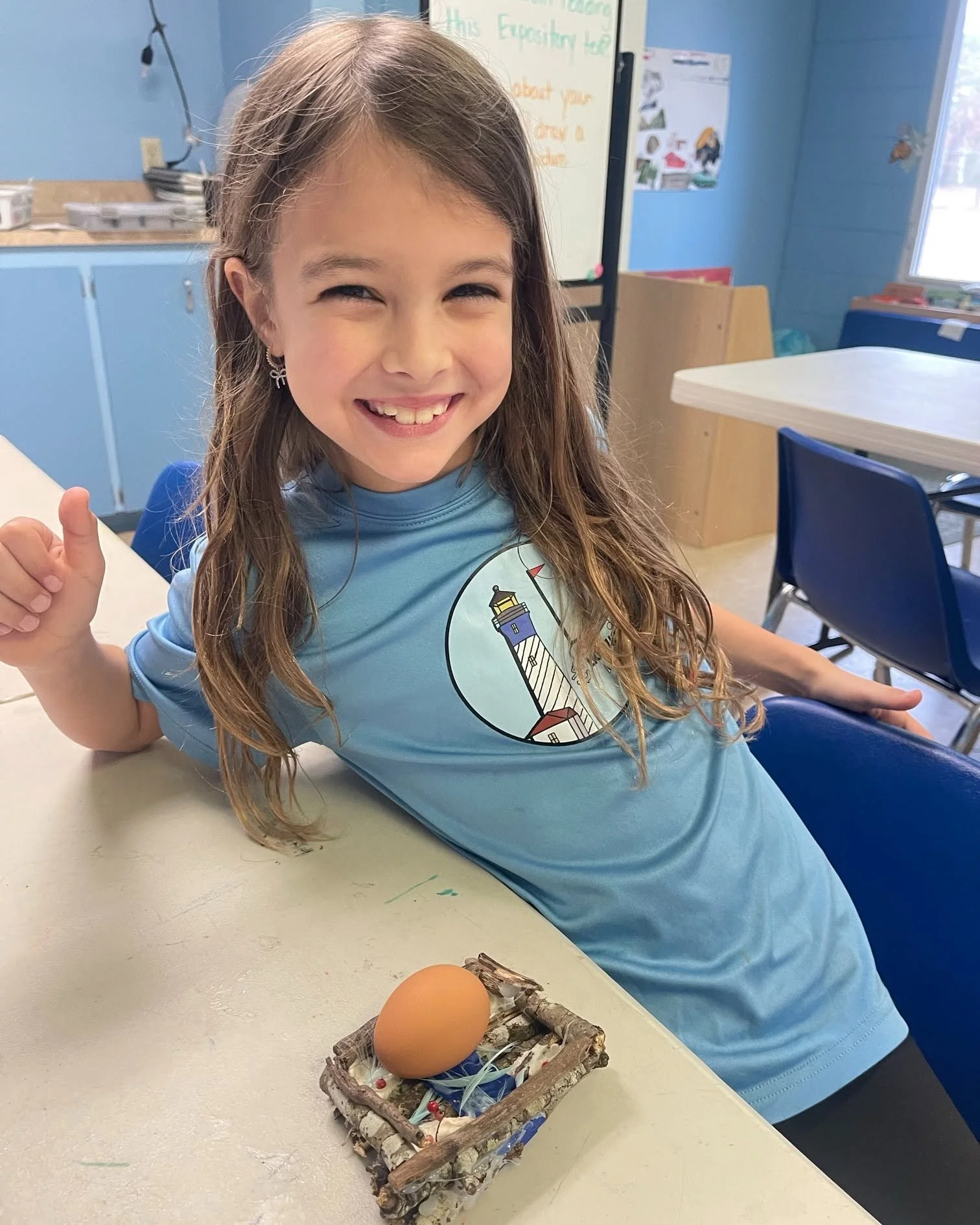
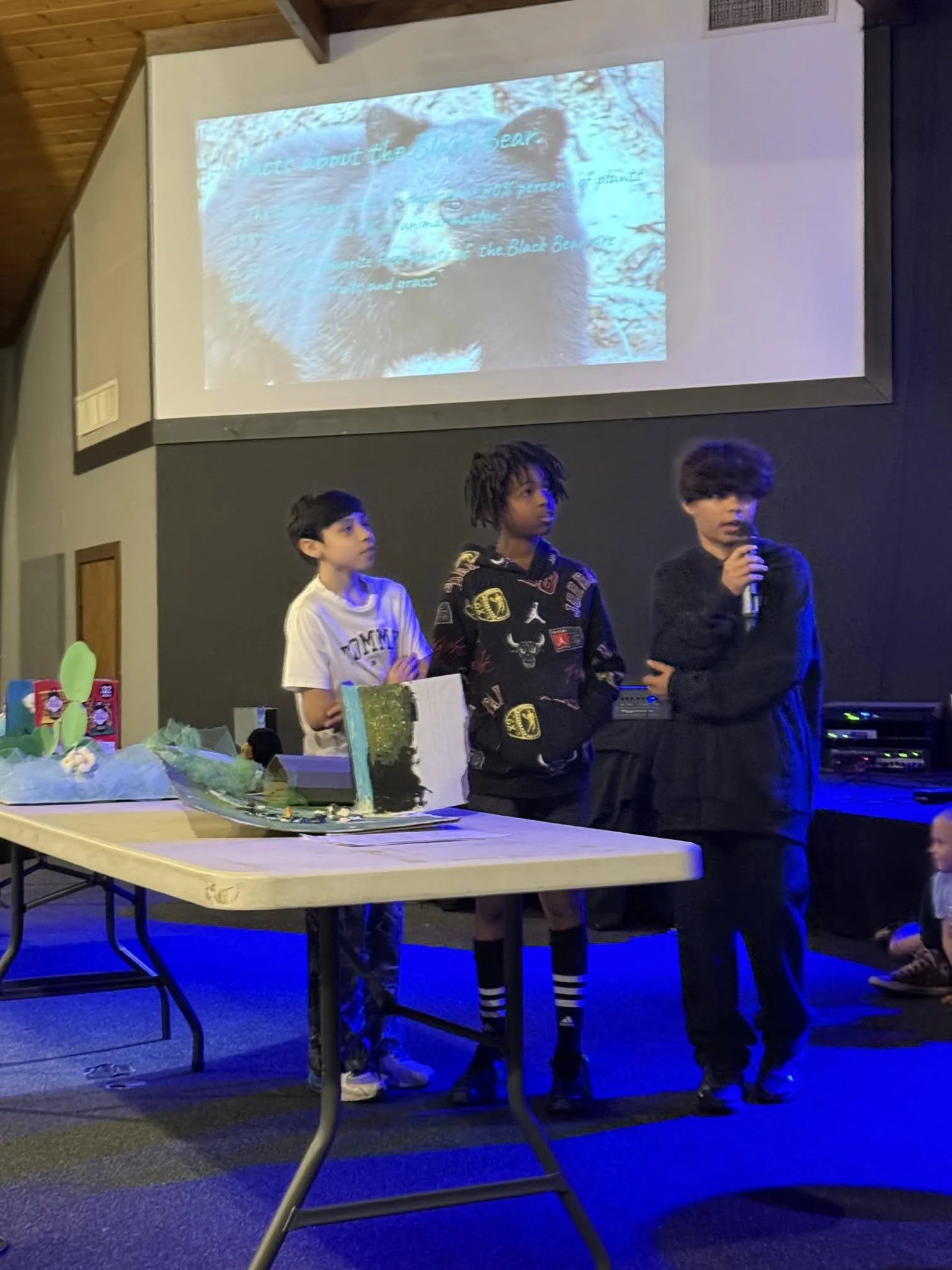
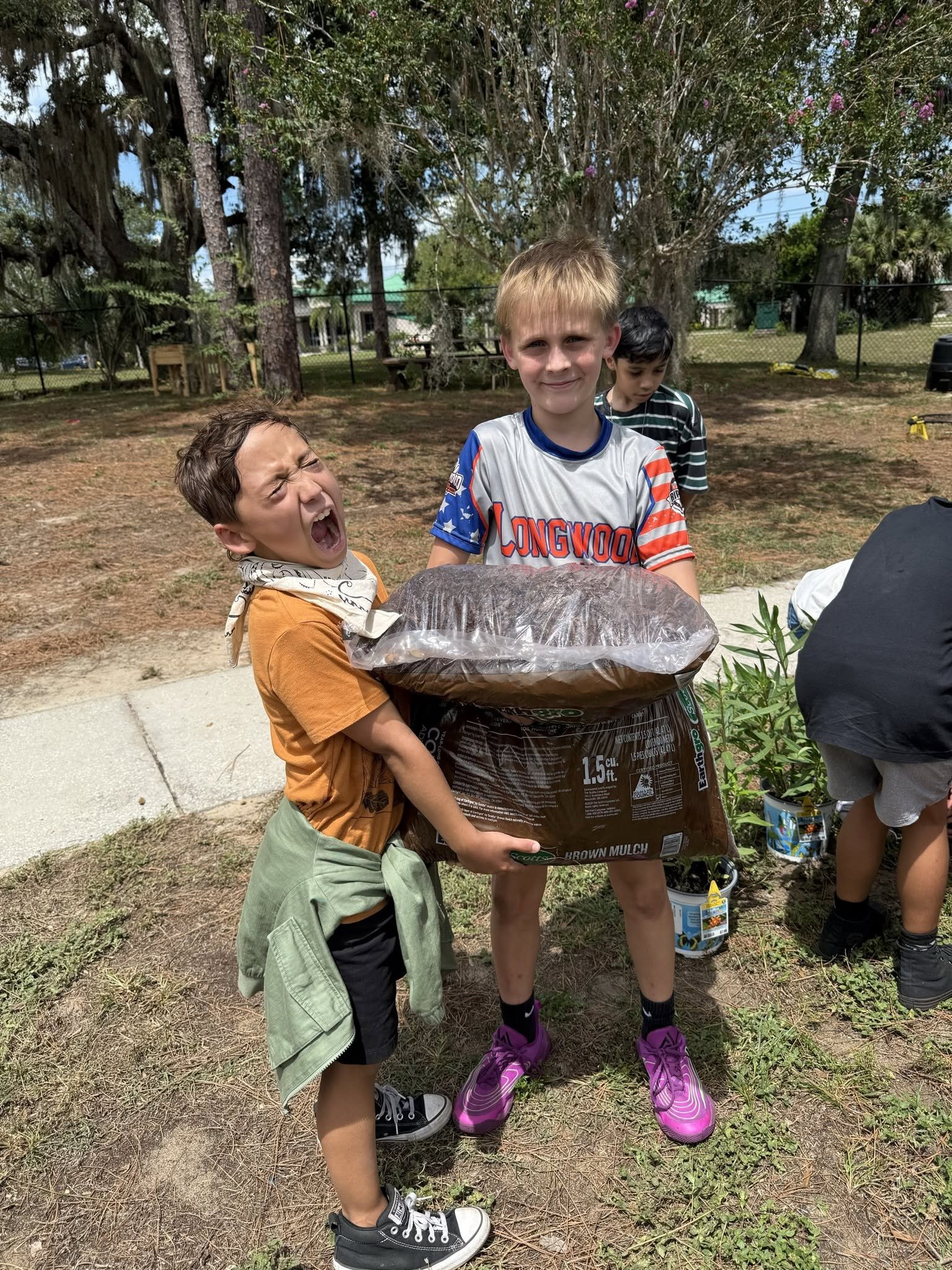
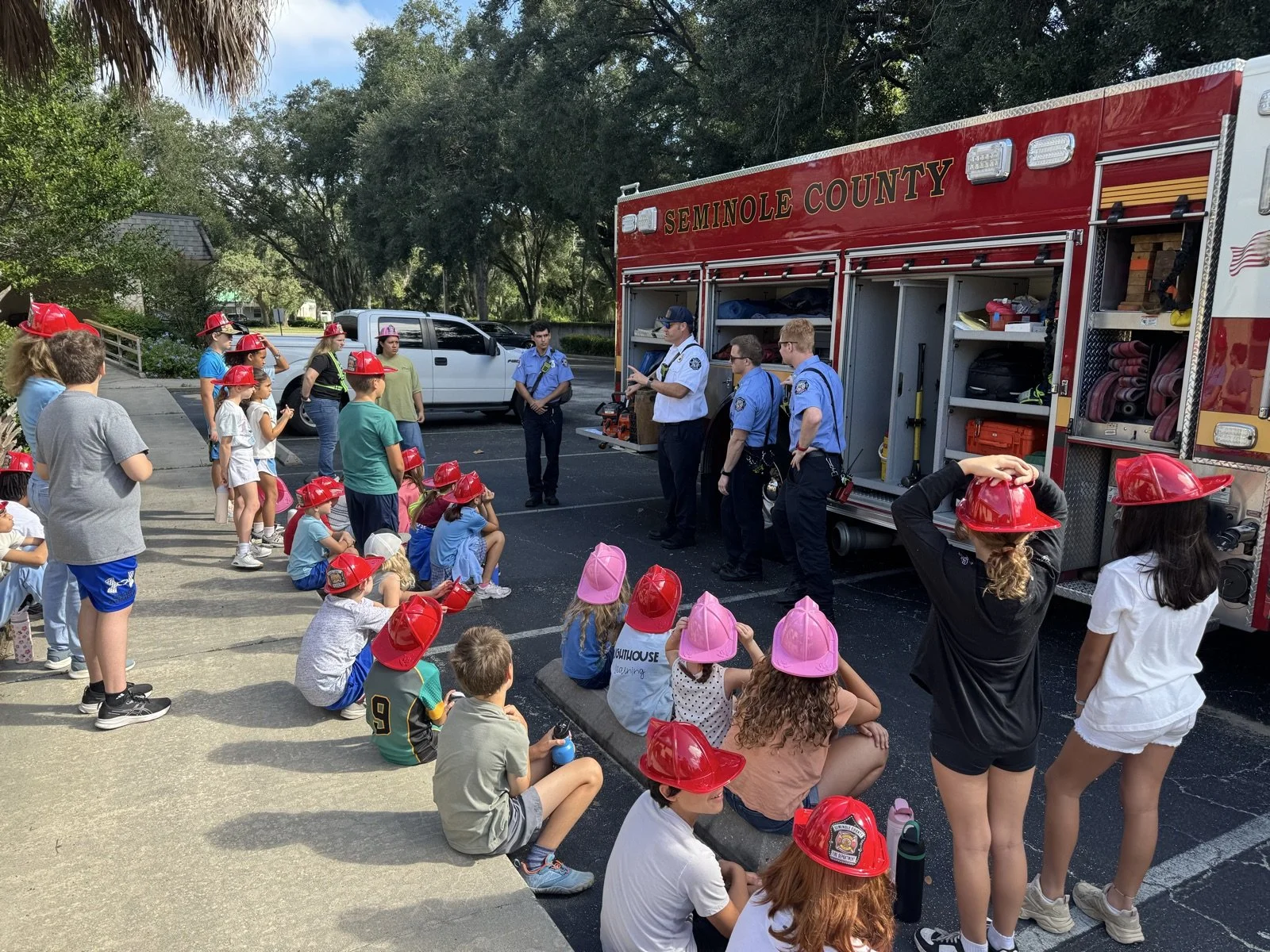
Enrichment Days give students opportunities to create, move, explore, collaborate, discover interests, build friendships, and experience learning beyond traditional academics.
Students rotate through experiences that may include:
Art
Music
Physical Education
Science
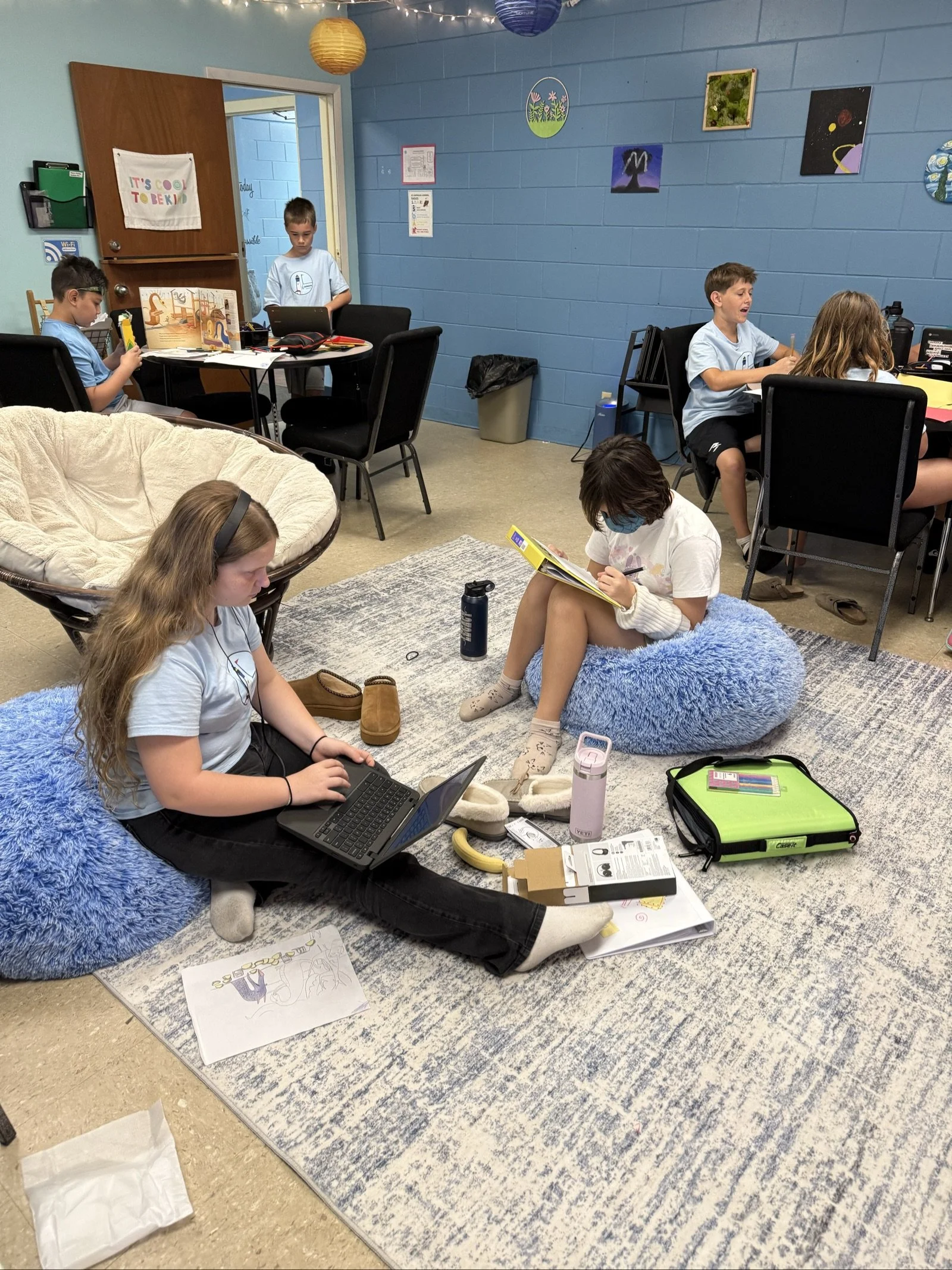
Study Lounge for hybrid students
Eagle Clubs
Hands-on projects
Farmers Market Creations
Enrichment Showcases
Field trips
Special experiences
Thursday and Friday are intentionally designed to complement our core academic days while giving students additional ways to discover their strengths and interests.
-
Families have multiple ways to experience Lighthouse.
Academics + Thursday Enrichment
Students can attend our Monday–Wednesday academic program and add Thursday Enrichment.
Academics + Thursday & Friday Enrichment
Students can attend Monday–Wednesday academics and add both Enrichment Days for a five-day Lighthouse experience.
Thursday & Friday Enrichment Only
Homeschool families can also join Lighthouse specifically for our Thursday and Friday Enrichment program.
This gives homeschool students opportunities to experience friends, community, specials, clubs, field trips, collaborative learning, and other experiences that can be difficult to recreate at home.
-
Eagle Clubs give students opportunities to explore their own interests.
Students have the opportunity to choose an Eagle Club, with club selections varying throughout the year based on student interests, staff talents, community partnerships, and available opportunities.
Choices may include:
Spanish
American Sign Language
Music
Art
STREAM
Kind Strong Club
Run Club
Art Club
Career Club
And other rotating opportunities
Club offerings vary and are subject to change.
Eagle Clubs give students a chance to find something they love—or discover something completely new.
-
Yes!
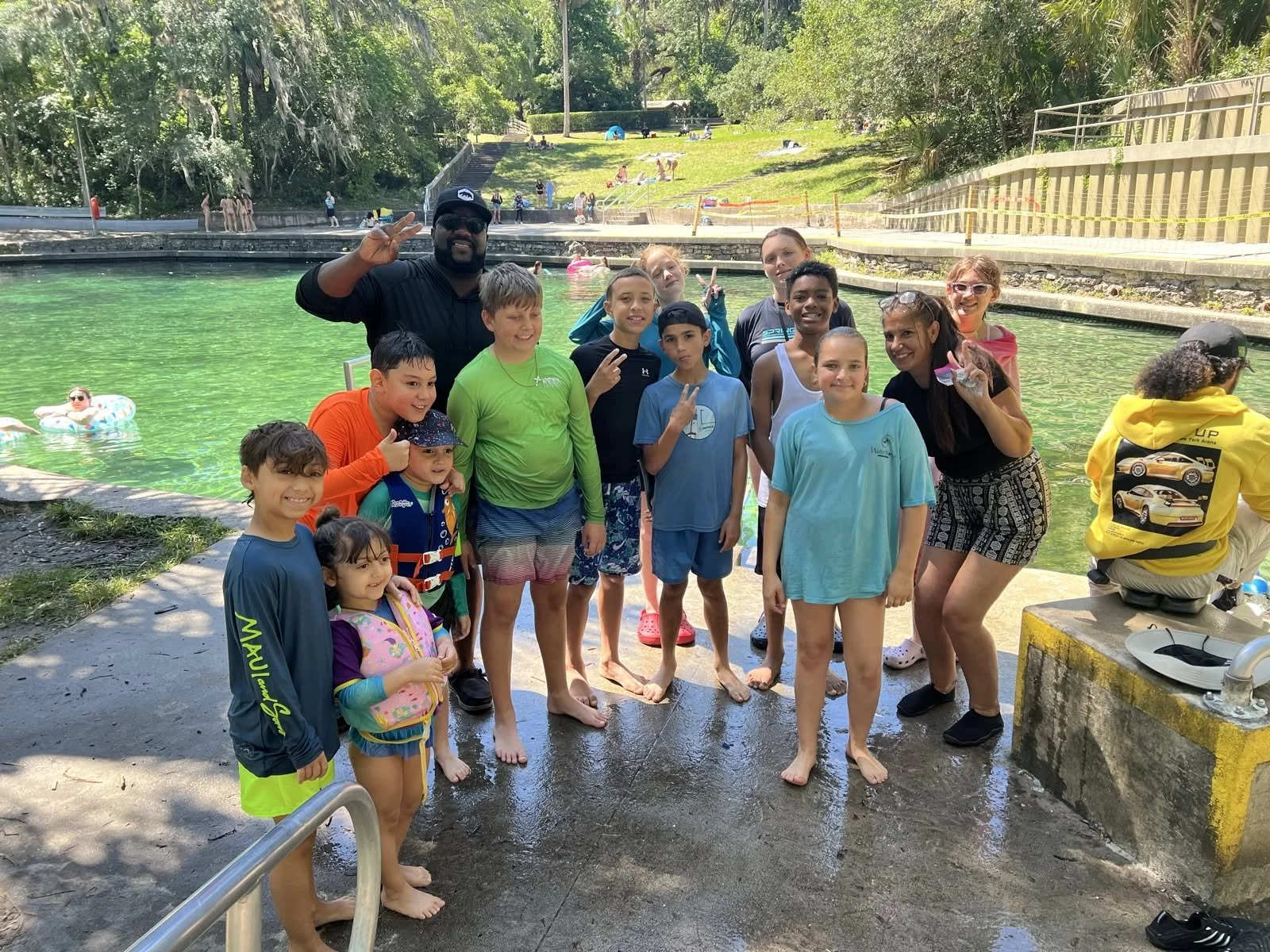
Field trips are an important part of the Lighthouse experience and give students opportunities to learn, explore, build friendships, and experience the world beyond our campus.
Destinations vary throughout the year and may connect students with science, nature, history, agriculture, careers, recreation, the arts, community experiences, and more.
Expectations + Family Partnership
-
Yes.
Home Learning is part of our academic accountability system and is designed to reinforce skills while helping students develop responsibility and independent learning habits.
Academic students receive Home Learning on Wednesday, with assignments due the following Monday.
Students attending Enrichment Days may have designated Study Lounge time to work independently on academic responsibilities.
We ask families to partner with us in helping students develop consistent Home Learning habits.
-
Personalized learning does not mean unstructured learning.
Students are expected to participate in their education and, developmentally, take increasing ownership of their responsibilities.
We expect students to grow in:
Attendance and participation
Academic effort
Completion of work
Responsibility
Organization
Respectful behavior
Responsiveness to teacher guidance
Care for their learning environment
Student ownership
We provide support, encouragement, instruction, feedback, and opportunities to practice.
Students are expected to engage in that process/
-
We believe strong communication builds trust and partnership.
The Playground App serves as our central communication hub for schoolwide announcements, calendar information, important updates, and direct parent-staff communication.
Families also receive regular communication from teachers and school leadership throughout the week.
We encourage families to stay connected through Playground, email, conferences, school events, and direct communication with our team.
Tuition + Scholarships
-
Yes. Lighthouse accepts eligible PEP and FES-UA scholarship funding.
Because scholarship programs, award amounts, funding schedules, and eligibility requirements can change, families should refer to our current Tuition & Enrollment information and Step Up For Students for the most up-to-date details.
Lighthouse billing and scholarship funding schedules do not always align, so families remain responsible for ensuring their account remains current according to their enrollment agreement.
Our team is happy to help families understand how scholarship funding works with their Lighthouse tuition.
Schedule + Logistics
-
Lighthouse offers flexible pathways so families can choose the combination of academics and enrichment that works best for their child.
Options include ⌄
Monday–Wednesday
Core AcademicsMonday–Thursday
Core Academics + Thursday EnrichmentMonday–Friday
Core Academics + Thursday & Friday EnrichmentThursday–Friday
Enrichment OnlyAvailability may vary by program, grade, and enrollment capacity.
-
Yes.
Lighthouse offers Extended Day options for families who need care outside of regular school hours.
Please refer to our current enrollment information for available hours, pricing, reservation requirements, and policies.
Admissions
-
Admissions is about more than a test score.
We thoughtfully consider the whole child, including:
Academic readiness
Placement information
Ability to participate in a group-learning environment
Responsiveness to teacher guidance and redirection
Independence appropriate for age
Ability to transition between activities
Respectful interactions with peers and adults
Ability to participate safely in our program
Level of academic, behavioral, or individualized support required
We may also review school records, speak with families, or recommend a visit or trial experience when additional information would help us determine fit.
Our goal isn't simply to enroll as many students as possible.
Our goal is to make sure Lighthouse is a place where your child can be successful.
Still Have Questions?
Choosing the right learning environment matters.
Every child is different. Every family is different. And sometimes the best way to know whether Lighthouse Learning feels right is to experience it for yourself.
We would love to meet your family, show you our community, and answer your questions.

Visit Lighthouse Learning
Explore Our Academics


Begin Admissions Process
Explore Our Enrichment